
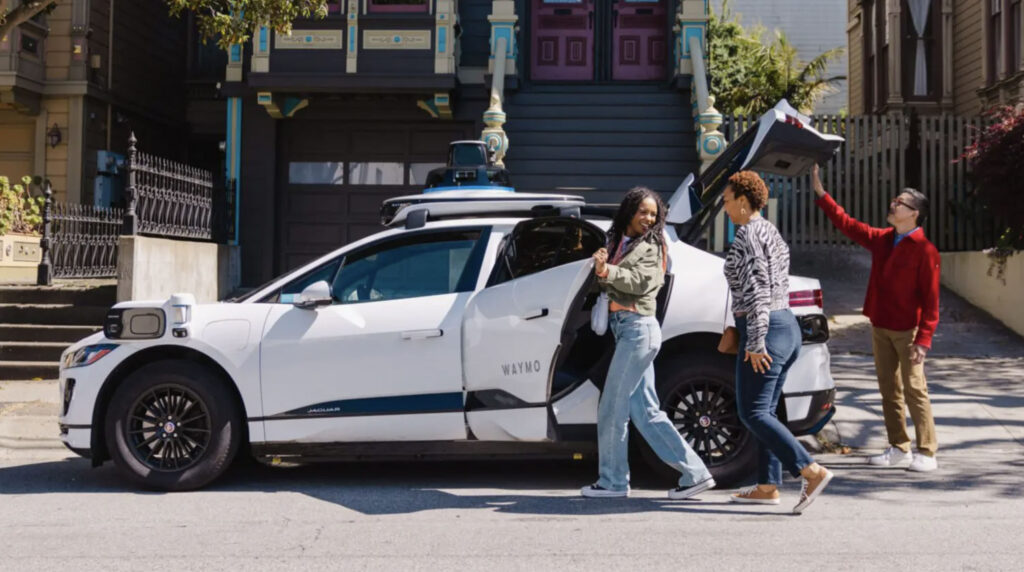
Waymo, Alphabet’s autonomous driving division, has announced plans to launch its robotaxi service in Dallas by 2026, marking a major expansion in its effort to lead the U.S. autonomous vehicle race ahead of competitors like Tesla. The move is part of a broader growth strategy to scale Waymo’s driverless operations beyond current hubs in Phoenix, San Francisco, and Los Angeles.
The decision to enter Dallas—one of the fastest-growing metro areas in the country— underscores Waymo’s confidence in its technology stack and its readiness to operate in diverse urban conditions. The Texas expansion is expected to significantly increase the size of Waymo’s operational domain and further distance the company from Tesla, whose own robotaxi rollout remains in development with no confirmed citywide deployments.
DALLAS BECOMES A STRATEGIC TESTBED FOR SCALING
Waymo says Dallas was selected for its expanding road network, favorable climate, and tech-friendly regulatory environment. The city’s mix of dense urban centers, suburban sprawl, and commercial corridors makes it an ideal candidate to train and test its fifthgeneration Waymo Driver across a wide range of real-world conditions.
The company plans to deploy a fleet of fully autonomous electric Jaguar I-PACE vehicles, each equipped with advanced lidar, radar, and camera arrays capable of real-time navigation without human input. By launching in Dallas, Waymo is not only entering a new market but also moving into a geographic region where Tesla maintains a significant operational footprint, including its Gigafactory Texas and upcoming Robotaxi product reveal. Waymo’s early start in the region could serve as a preemptive positioning move to dominate autonomous ride-hailing in Texas before Tesla’s still-theoretical service becomes a reality.
TESLA STILL CHASING A FULL SELFDRIVING LAUNCH
While Tesla continues to promote its Full Self- Driving (FSD) beta software and promises a dedicated Robotaxi vehicle, the company has yet to demonstrate a fully autonomous, driverless ride-hailing service operating under regulatory approval. Tesla’s system remains Level 2 (driver-assist) under SAE standards, while Waymo has already achieved Level 4 autonomy in defined geofenced areas.
Tesla CEO Elon Musk has said that Robotaxi service is a core priority for 2025–2026, with expectations that a purpose-built autonomous vehicle will be unveiled later this year. However, the timeline for regulatory approval, safety validation, and actual fleet deployment remains uncertain. In contrast, Waymo has already logged millions of miles in fully autonomous mode and received commercial permits to operate without a safety driver in several major cities.
This operational lead gives Waymo a critical advantage in both public perception and policymaker trust, especially as cities begin crafting frameworks for robotaxi integration into urban transportation systems.
WAYMO’S REGULATORY EDGE AND SAFETY RECORD
Waymo’s methodical approach—prioritizing safety validation, local partnerships, and regulatory cooperation—has given it a solid foundation for scaling across states. The company has spent over a decade developing its autonomy software and sensor hardware in-house, allowing for full-stack control that aligns with safety and liability requirements.
In Dallas, Waymo is expected to follow the same deployment playbook used in Phoenix and San Francisco, beginning with employee-only rides, then gradually expanding to early rider programs and eventually opening to the public through the Waymo One app.
Its vehicles will operate in defined service areas, with remote fleet monitoring and redundancy systems in place. This contrasts with Tesla’s driver-centric model, which relies on distributed vehicle intelligence and a softwarefirst approach that lacks external oversight during operation.
COMPETITION INTENSIFIES ACROSS AUTONOMY SECTOR
Waymo’s Dallas launch is part of a broader trend in the AV industry as multiple players jockey for position in commercial deployments. GM’s Cruise has also targeted Texas cities like Austin and Houston but has faced recent setbacks after safety incidents prompted regulatory pauses.
Other competitors, including Aurora and Zoox, remain in pilot or testing phases, focusing on logistics or narrow urban corridors. Waymo’s ability to operate fully driverless passenger services at scale gives it a rare advantage, and the Dallas expansion will be a test of whether that lead can hold under real commercial pressure.
For Tesla, the clock is ticking. While its vehicle fleet advantage and vertically integrated AI efforts are unmatched, the lack of regulatory traction and real-world deployments leaves it behind in the actual robotaxi race.
Leave a Reply
You must be logged in to post a comment.